
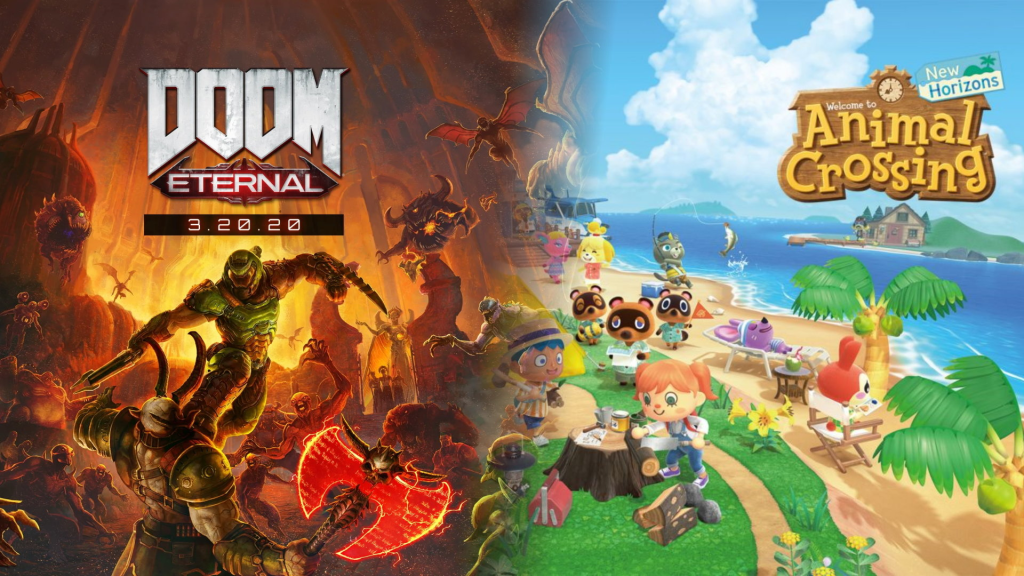
For much of 2020 and 2021, the video game industry appeared unstoppable. As COVID-19 lockdowns kept millions of people at home, gaming became one of the world’s fastest-growing forms of entertainment. Player engagement soared, digital sales exploded, and publishers rushed to expand development teams.
What seemed like the beginning of a new golden age would eventually become one of the industry’s most painful corrections.
By 2023 and 2024, the same industry that had spent years hiring aggressively was announcing layoffs almost weekly. Thousands of developers, artists, designers, producers, writers, and QA testers lost their jobs as publishers struggled to adapt to a post-pandemic reality.
The result has become one of the largest workforce contractions in modern gaming history.
The Pandemic Boom
The roots of today’s crisis can be traced back to 2020.
When countries around the world entered lockdowns, gaming quickly became a primary source of entertainment and social interaction. Time spent gaming increased dramatically, digital sales surged, and many publishers reported record engagement and revenue. Statista reported significant increases in both player activity and digital game spending during the pandemic period.
Industry research from SuperData found that gaming revenue grew roughly 12% year-over-year in 2020, with millions of new players entering the market.
Publishers interpreted this boom as the start of a long-term growth trend. Companies opened new studios, acquired developers, expanded live-service teams, and hired aggressively to meet what they believed would be permanently elevated demand.
For a brief moment, gaming looked recession-proof.
The Miscalculation
The problem was not that gaming stopped growing.
The problem was that many companies planned their future around pandemic-era growth rates.
As lockdowns ended and consumers returned to travel, restaurants, concerts, and other entertainment options, gaming engagement naturally cooled. Demand remained strong, but growth normalized.
Unfortunately, many publishers had already expanded too far.
At the same time, game development costs were increasing dramatically. Modern AAA games require larger teams, longer development cycles, expensive technology, and ongoing post-launch support. Budgets that once hovered around tens of millions of dollars now regularly exceed $200 million for major projects.
Studios suddenly found themselves carrying payrolls built for extraordinary growth in an industry that had returned to normal business conditions.
The Layoff Wave Begins
Layoffs began accelerating in 2022 and intensified over the following years.
Industry trackers estimate that approximately 8,500 gaming jobs were lost in 2022, followed by about 10,500 layoffs in 2023. By 2024, the situation worsened dramatically, with estimates ranging from 14,600 to nearly 14,800 lost jobs, making it the worst year on record.
Major companies implementing layoffs included:
- Microsoft Gaming
- Sony Interactive Entertainment
- Electronic Arts
- Epic Games
- Riot Games
- Ubisoft
- Unity Technologies
- Take-Two Interactive
- Embracer Group
Many of these companies remained profitable or reported substantial revenues, highlighting that the layoffs were often tied to restructuring, strategic shifts, and investor expectations rather than immediate financial collapse.
The Numbers Behind the Collapse
The scale of the industry’s contraction is difficult to overstate.
According to industry trackers and the Game Developers Conference State of the Industry report:
- Roughly 58,494 gaming jobs are estimated to have been lost between 2022 and 2026.
- 2024 was the peak year, with approximately 14,600 layoffs, making it the worst year on record.
- One in three U.S. developers reported being laid off during the previous two years.
- A single round of layoffs at Microsoft affected approximately 9,000 employees’ company-wide, with Xbox among the divisions impacted.
- Two-thirds of surveyed AAA developers reported layoffs occurring at their companies.
- More than 30 studios reportedly shut down entirely during the layoff wave.
- The games industry continued to grow despite the cuts, with Newzoo projecting a global gaming market worth $188.8 billion in 2025.
- Restructuring, revenue concerns, and market changes were among the most commonly cited reasons for layoffs.
- Nearly half of displaced developers surveyed had not yet found new employment.
- North America accounted for more than two-thirds of reported layoffs, with California among the hardest-hit regions.
Perhaps the most striking part of these statistics is that they occurred while the gaming market itself remained healthy and continued generating billions in revenue. Unlike the Video Game Crash of 1983, players did not stop buying games. Instead, companies that had expanded aggressively during the pandemic found themselves trying to reduce costs and satisfy shareholder expectations.
Mergers, Consolidation, and Investor Pressure
Another major contributor to the crisis was consolidation.
During the pandemic, publishers aggressively acquired studios and intellectual property. Companies such as Microsoft and Embracer Group spent billions expanding their portfolios.
When growth slowed, executives faced pressure to improve efficiency and cut expenses.
Embracer Group became one of the most visible examples, launching a sweeping restructuring effort that resulted in layoffs, project cancellations, and studio closures.
As acquisitions became more common, duplicate roles, overlapping studios, and underperforming projects often became targets for reduction.
The Live-Service Gamble
Many publishers also bet heavily on live-service games.
The success of titles such as Fortnite encouraged companies to pursue recurring revenue through battle passes, microtransactions, and ongoing content updates. Every publisher wanted its own long-term platform capable of generating revenue for years.
The problem is that only a small number of live-service games can dominate player attention at once.
When expensive projects failed to gain traction, companies often responded by reducing staff or canceling content plans. Several publishers spent years chasing the next Fortnite only to discover that the market was already saturated.
This environment created enormous financial risk, particularly for large-budget projects trying to grasp the next big thing…

Which is the Extraction Shooter genre. No game better represents the industry’s current dilemma than Marathon, Bungie’s extraction shooter.
Developed during the height of industry expansion and live-service enthusiasm, Marathon embodies many of the trends that defined the pandemic boom: large budgets, long development cycles, and corporate expectations for a long-term online platform.
The project faced criticism during testing periods and encountered controversy during development, leading to concerns about its future.
However, unlike several canceled service games, Marathon survived those challenges. Bungie continued publishing development updates, content roadmaps, and post-launch plans throughout 2026, signaling ongoing support for the title.
For many observers, Marathon is less about whether one game succeeds or fails and more about whether the industry’s live-service strategy remains viable in an increasingly competitive market.
If Marathon thrives, it could validate years of investment in online service-based games. If it struggles, it may become another example of how difficult it has become to launch a new live-service franchise in today’s environment.
Human Consequences

Behind every statistic is a developer whose career was disrupted.
The industry’s contraction has affected both veteran developers and newcomers trying to enter the business. Increased competition for fewer positions has made finding work increasingly difficult.
The Game Developers Conference State of the Industry report found that approximately one-third of American developers reported being laid off in the previous two years, while roughly half said their companies had conducted layoffs during the prior year.
The consequences include:
- Fewer entry-level opportunities
- Increased competition for openings
- Reduced willingness to fund new intellectual property
- Greater risk aversion from publishers
- Growing interest in labor organization and unionization
For many developers, the industry’s correction has transformed gaming from a dream career into an increasingly unstable profession.
Was It Really a Bubble?
Many analysts argue that what burst was not the gaming industry itself, but a growth bubble built around unrealistic expectations.
Gaming remains one of the world’s largest entertainment industries. Revenue continues to grow, player counts remain strong, and demand for games has not disappeared.
What failed was the assumption that the extraordinary conditions of 2020 and 2021 would continue indefinitely.
Companies hired for a future that never arrived.
Investors expected growth rates that proved impossible to sustain.
Publishers greenlit projects based on pandemic-era projections.
When reality returned, workers paid the price.
The gaming industry’s layoff crisis did not emerge overnight. It was the result of pandemic-driven expansion, aggressive hiring, expensive acquisitions, rising development costs, and unrealistic growth expectations that began taking shape in 2020.
Between 2022 and 2026, nearly 58,500 jobs were lost across the industry, dozens of studios closed, and countless careers were disrupted. Yet gaming itself remains a thriving business generating hundreds of billions of dollars globally.
The industry grew too quickly, believed its own hype, and is now paying the price for miscalculating a historic uptick thinking it would be a permanent reality.



Leave a Reply